

How to Prepare for a Flat Move in Manchester
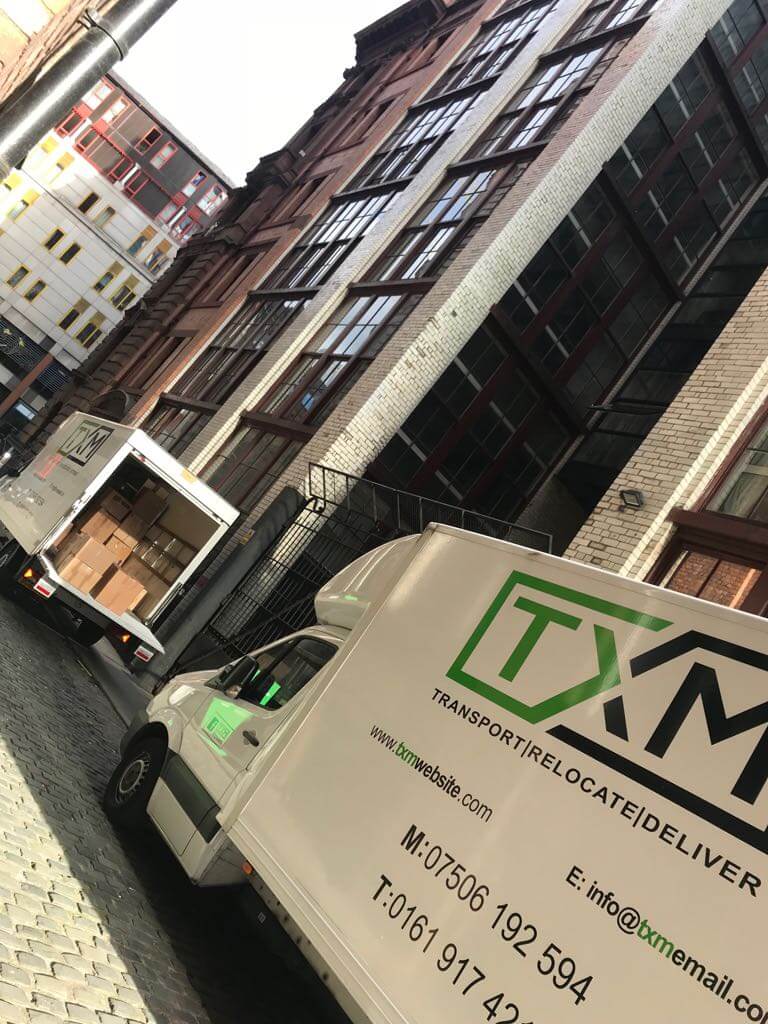 A flat move in Manchester is rarely a “park out front and walk straight in” job. The city centre converted mills around Ancoats, the high-rise apartments at Deansgate and Castlefield, and the period flats of Didsbury and Chorlton all come with their own access quirks. Loading bays book up, lifts get held by neighbours, stairwells get tight, and a half-hour delay on parking can turn into a full day of overrun on the bill. The TXM Removals team, based at 34 Brindley Rd, Old Trafford, goes the Xtra Mile on every flat job, and we have moved enough Greater Manchester flats to know that preparing well for the day is the single biggest lever on whether the job runs to plan or runs over. This guide walks you through how to prepare for a flat move in Manchester, step by practical step, so the truck arrives, loads, and leaves without drama.
Why Flat Moves Need Extra Planning
A house move usually starts and ends at a kerb. A flat move adds three or four layers on top. There is the front door of the building, the lift or the stairwell, the corridor, the door of the flat itself, and on a moving day with a tight booking window, every one of those layers eats time. Loading a three-bed semi in Worsley is a different job to loading a one-bed flat in a Northern Quarter mill conversion where the lift is shared with a coffee shop downstairs. Planning ahead tells you what kit the team needs, how long the job will realistically take, and which permissions you have to chase before the day. A surveyor from a house removals provider doing a pre-move walk-through will pick up most of the issues. If you book sight unseen, you carry the risk yourself. Before anything else, download our Moving Day Checklist and use it as your planning framework from the moment you confirm the date.
Check Access, Stairs and Lift Availability
Start with the route from the front of the building to the front of the flat. Walk it. Time it. Photograph any tight turns. The questions to answer before moving day are simple. Is there a lift, and is it large enough for a sofa or a wardrobe lying flat? Most lifts in Manchester apartment blocks built since the early 2000s will take a standard double mattress upright but will not take a king-size frame in one piece. If the lift is too small, the team is on the stairs, and the price reflects that. If the building has a service lift, ask whether you need to book it. A lot of the larger blocks at MediaCityUK in Salford Quays and around Deansgate require a 24 or 48-hour booking with the concierge. The lift gets a protective blanket fitted and the keys held during your slot. Without that booking, you queue with residents who are returning home with shopping, and the team loses time on every cycle. For walk-up flats with no lift, count the floors and the steps. A standard Victorian villa conversion in Withington or Fallowfield is usually two or three flights. A 1930s purpose-built block in Prestwich is often four. Tell your removals firm the count up front. It feeds straight into the time estimate and the quote. Our Manchester removals team asks these questions on every survey so nothing catches anyone by surprise on the day.
Plan for Parking and Loading Restrictions
Manchester City Council and the surrounding Greater Manchester boroughs run pay-and-display, residents-only, and red route restrictions across most of the catchment. A 7.5-tonne removals truck cannot legally sit on a single yellow line during restricted hours, and a parking attendant will not give a removals firm the benefit of the doubt. The fix is a parking bay suspension. Manchester City Council allows residents and businesses to apply to suspend a bay or two for a removals job, and the application asks for the date, the time window, and the vehicle details. The council recommends applying at least ten working days ahead. Other boroughs in Greater Manchester run their own processes through their parking services teams. Outside the city centre, in places like Didsbury or Chorlton, a daytime move on a residential street usually works without a formal suspension, but you should still warn the neighbours. If the building has a designated loading bay, find out who controls it. Some apartment blocks reserve the bay for management deliveries. Some let residents book it for moves. The concierge or building manager will know. If you are moving into a place above a shop or a restaurant on Oxford Road or Wilmslow Road, the loading bay belongs to the business, and you will need to time the move around their delivery schedule.
Pack with Shared Entrances and Tight Spaces in Mind
In a flat with shared corridors, the way you pack changes the way the move runs. Heavy items go in smaller boxes so a porter can carry two at a time without blocking a doorway for a neighbour. Pictures, mirrors, and TVs go in flat picture boxes, not loose under an arm, because a knock against a doorframe in a narrow Ancoats corridor is the kind of damage no one wants to argue about. Label every box on the top and one side, with the room name and a one-line content summary. The team carrying boxes up four flights does not want to read your handwriting twice. If you are using the TXM packing service, the team brings purpose-made boxes, mattress bags, and TV cartons, and labels as they go. That takes the packing load off you entirely in the days before the move. For studios and one-bed flats where a full removals truck is overkill, our man and van service handles the same work in a smaller vehicle that can pull right up to the building entrance.
Prepare Furniture for Narrow Hallways and Staircases
The piece of furniture that does not fit out of the flat is a problem nobody wants on moving day. Measure the doorways, the stairwell turn, and the lift if you have one. The choke points to check are the front door of the flat, the corridor turn, the lift entrance, and the front door of the building. Take the smallest measurement and compare it against your largest piece. Beds, wardrobes, and modular sofas usually need to come apart. The TXM porters will help where they can, but we are honest about the limits. Reassembling a flat-pack wardrobe that has been together six years is not the same as building it from a new box. Where dismantling is needed, having the original instructions and a labelled bag of fittings ready saves time and protects the piece. Solid hardwood furniture, antiques, and anything with hand-cut joinery should travel whole, wrapped and strapped. For high-value or delicate pieces, our White Glove service builds the extra time and care into the schedule from the start. If you are not sure whether a piece needs the standard service or the specialist approach, flag it on the survey and we will plan the route through the flat in advance.
Confirm Timings with Building Management or Landlords
Tower-block buildings, mill conversions, and managed flats almost always have a building manager or a concierge with rules on move-in and move-out times. Common restrictions in Manchester apartment blocks include no moves outside 09:00 to 17:00 on weekdays, no moves on bank holidays, a 4-hour maximum lift hold, and a refundable deposit against damage to communal areas. If you are renting, your landlord or letting agent will need notice too. Inventory check-out times often clash with removals windows. Book the check-out for the morning of the move, not the afternoon, so the team can load while the inventory clerk works through the flat. A room-by-room Moving Day Checklist helps you stay ahead of both the inventory clerk and the removal crew on the same morning. For commercial moves out of co-working space or a small office, the rules are tighter. Our office removals team handles the building manager liaison directly when needed. If your move-in date does not line up with your move-out date, short-term storage bridges the gap. A common Manchester scenario is a Friday move-out from a flat in Salford with a Monday move-in to a new place in Stockport, with the contents stored over the weekend in our Old Trafford depot.
What to Expect on Moving Day
The team arrives in a branded TXM truck at the agreed time, in uniform, with the kit listed on the survey. The lead porter walks the flat with you, confirms the inventory, and agrees a loading order. Heavy items go in first against the cab of the truck, fragile items go in last and on top, and labelled boxes get loaded by destination room. Communal areas get protected. We lay floor runners on lobby flooring and stairwells where the building requires it, and we use door wedges on fire doors only where building rules allow. The team checks back with you on anything ambiguous before it leaves the flat. At the new address, the same routine runs in reverse. Boxes go to their labelled rooms, beds get placed and reassembled where we dismantled them, and the team does a final walk-through with you to confirm nothing has been left behind. If your new flat is not yet ready or you need time between moves, our storage service keeps your belongings safe and accessible at our Old Trafford depot. The TXM Xtra Mile philosophy lives in that last 15 minutes. We do not treat your home like a job. We treat it like a responsibility.
How TXM Helps with Flat Removals in Manchester
TXM Removals is a Greater Manchester firm with a depot in Old Trafford and a regularly serviced fleet sized for everything from a studio man and van job to a fully loaded three-bed flat across town. Our pre-move surveys are done in person, so the quote you get is built on what we have actually seen, not on what was guessed from a phone call. We work across the whole city and the wider catchment, including Salford, Stretford, Worsley, Didsbury, Chorlton, Urmston, Stockport, Altrincham, Bury, Bolton, and Tameside. If your flat sits inside the M60 ring, we have probably moved someone out of the same building. Find out more about our Manchester removals service or browse our coverage areas to confirm we reach your postcode. Ready to plan a flat move in Manchester? Request a free, written quote from TXM and we will come back with clear pricing within one working day.