

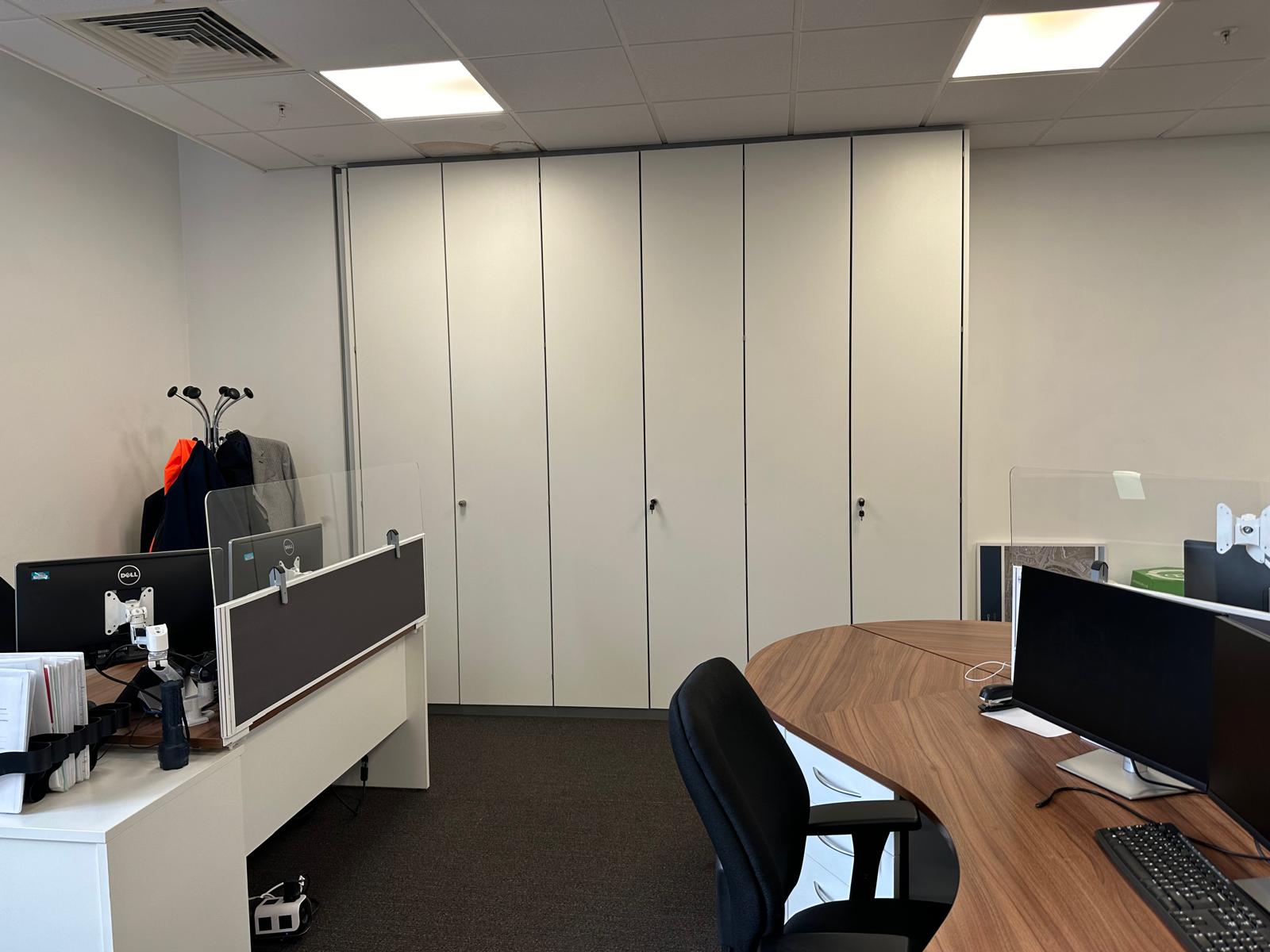
An office move in Manchester is not simply a question of booking a van. Loading bay access at Spinningfields, security sign-in at MediaCityUK, lift dimensions in the Northern Quarter’s converted mills, IT infrastructure that cannot afford a full working day of downtime: every commercial move in this city comes with its own logistical layer. This guide covers what businesses actually need to plan before, during, and after an office relocation in Greater Manchester, so the move goes right the first time.
Why Office Moves in Manchester Require a Different Approach
Manchester’s commercial property mix is genuinely varied. A business leaving a modern glass-fronted unit in Spinningfields faces very different access constraints from one vacating a three-storey warehouse conversion in Ancoats or a terrace office in Chorlton. The city centre has traffic management zones, restricted loading windows, and buildings with freight lifts that are booked weeks in advance.
Planning needs to account for:
- Building access windows: many managed buildings in Manchester city centre restrict loading to specific hours, often 7-9am or outside peak foot traffic. Confirm this with your building manager at least two weeks before move day.
- Parking and yellow-line restrictions: the Northern Quarter, Piccadilly, and Deansgate all have on-street parking restrictions that require a road closure permit from Manchester City Council if a removal vehicle needs to stop for an extended period.
- Security and fob access: if your new premises requires fob or keycard access, confirm exactly who holds working access keys on move day. Delays at the door burn time and cost money.
- Lift dimensions: boardroom tables, server racks, and large monitors frequently exceed standard passenger-lift dimensions. Measure the lift at both the old and the new building before move day.
Your Office Move Planning Checklist
Commercial removals in Manchester run on detail. This checklist covers the eight areas that most often trip businesses up, and roughly when each one needs attention.
| Area | What to plan | When |
|---|---|---|
| IT and telecoms | Back up data, label cables, plan server disconnect and reconnect, port phone lines and broadband | 5-6 weeks before |
| Desks and furniture | Confirm what moves, what is dismantled, and what is disposed of; measure large items against doorways and lifts | 3-4 weeks before |
| Files and documents | Sort, archive, and label confidential files; arrange secure transport or shredding | 3-4 weeks before |
| Building access | Confirm loading windows, freight-lift booking, and security sign-in at both sites | 2 weeks before |
| Parking and loading | Check on-street restrictions and apply for a road closure permit if one is needed | 2 weeks before |
| Lift use | Measure passenger and freight lift dimensions at both buildings and book the freight lift | 2 weeks before |
| Timing | Choose a move date and window that avoids peak trading, then confirm it with the removals team | 4-6 weeks before |
| Staff communication | Brief staff on the new address, parking, transport links, and first-day IT availability | 2-3 weeks before |
Building Your Office Move Timeline
Most Manchester office moves benefit from a minimum six-week planning window. Tighter is possible, but below four weeks the chance of a preventable delay rises sharply.
| Stage | Timeframe before move | Key actions |
|---|---|---|
| Initial planning | 6-8 weeks | Confirm new premises access, notify building manager, survey lift dimensions |
| IT and telecoms | 5-6 weeks | Arrange broadband transfer, server migration plan, phone line porting |
| Packing and labelling | 2-3 weeks | Order packing materials, assign staff room responsibilities or book a packing service |
| Staff communication | 2-3 weeks | Brief employees on new address, parking, transport links, first-day logistics |
| Booking the removals team | 4-6 weeks | Confirm date, access times, vehicle size, and whether a pre-move survey is needed |
| Move day | Day 0 | Loading, transit, unloading, basic desk setup |
| Post-move | 1-2 weeks | Update business address on Companies House, Google Business Profile, website, stationery |
What to Do with IT Equipment
IT infrastructure is the most common source of post-move downtime. A monitor arriving with a cracked screen or a server that was improperly disconnected before transport can set a business back by days. The planning steps that prevent this are straightforward.
Before the move
- Back up all critical data before any hardware is disconnected. This should happen no later than 48 hours before move day.
- Label every cable at both ends before disconnecting. A label printer and cable ties cost under £20 and save hours on the other side.
- Photograph the back of each workstation and server rack before dismantling. Reassembly is significantly faster when there is a reference image.
- Confirm with your IT provider or internal team who is responsible for disconnecting and reconnecting server hardware. Removal crews transport equipment; IT professionals reconnect it.
On the day
- Pack monitors flat in double-walled boxes with foam padding or bubble wrap. Stacking monitors vertically in transit without adequate padding is the single most common cause of screen damage.
- Servers and UPS units should travel upright in their original packaging where possible. If original packaging is unavailable, use transit blankets and secure the units against movement in the vehicle.
- Keep a box of essential items with you rather than loading it onto the vehicle: dongles, admin credentials, power cables for key machines, and anything the business needs operational within the first two hours.
Reducing Business Downtime
Every hour a business is not operational is revenue lost, so the goal of any commercial move is to shorten the gap between switching off at the old site and working again at the new one. A few decisions make the biggest difference:
- Move outside trading hours. Many Manchester businesses move on a Friday afternoon or over a weekend so the team can set up over the quiet period and staff walk into a working office on Monday.
- Sequence the move so priority areas land first. Agree with your removals team which desks, servers, and departments are unloaded and set up first, so the business-critical functions are live before anything else.
- Run IT migration in parallel, not after. Broadband and phone porting should be arranged so the network is ready to switch on as soon as the hardware arrives, rather than starting the process on move day.
- Keep a skeleton setup running. Where possible, leave a small number of machines and a phone line live at the old site, or bring laptops on mobile data, so the business can still answer calls during the move.
- Use a pre-move survey. Getting the vehicle size and crew number right first time avoids a second trip, which is the most common cause of a move overrunning into a second day.
Common Mistakes Businesses Make During Office Moves
- Booking the move date before confirming building access times. A removal vehicle arriving outside the permitted loading window at a managed building in Manchester city centre will be turned away.
- Leaving IT migration to move day. Server migrations and broadband transfers have their own lead times. Starting these conversations on the week of the move is too late.
- Not labelling boxes by room AND content. Boxes labelled only with a room name slow unpacking down significantly. “Finance, invoices Q1 to Q2 2026” is more useful than “Finance” on its own.
- Underestimating volume. Offices accumulate filing cabinets, stationery stock, and IT peripherals that are not visible until someone opens the cupboards. Walk every storage area before confirming vehicle size with your removals team.
- Skipping the post-move address update checklist. Companies House, HMRC, the ICO register, banking mandates, supplier accounts, Google Business Profile, and the website footer all need updating. Missing one can cause delayed correspondence and, in the case of HMRC, compliance issues.
FAQs
How far in advance should a Manchester business book office removals?
For most office moves in Greater Manchester, four to six weeks gives enough lead time to confirm a date, carry out a pre-move survey, and plan access logistics. Moves involving large volumes of IT equipment, managed buildings with restricted loading windows, or a moving date that falls on a Monday or a Bank Holiday Monday benefit from a longer runway. For a full office relocation from one side of Manchester to the other, six to eight weeks is a solid working window.
Do we need a road closure permit for our Manchester office move?
If the removal vehicle needs to park on a public road in a restricted zone for an extended period, common in Deansgate, the Northern Quarter, and around Piccadilly, a road closure or parking suspension permit from Manchester City Council is required. The council needs at least five working days’ notice, so allow up to two weeks to be safe and factor it into your planning timeline. TXM Removals can advise on whether your specific move location is likely to need one.
How do TXM Removals price an office move?
TXM offers two pricing structures for commercial moves: an hourly rate for smaller or internal relocations, and a fixed-price quote for larger or more complex jobs following a site survey. The quote you receive is the price you pay, with no hidden costs. Get a quote for your office move or call 07506 192 594 to discuss the job.
What happens if we need storage between leaving the old office and moving into the new one?
Gap periods between commercial leases are common in Manchester, particularly when a new fit-out is running behind schedule. TXM Removals offers secure storage, including a mobile storage option, for businesses that need a holding solution between their old and new premises. Discuss the dates and volume on the initial survey call and the team will advise on the most practical arrangement.
Ready to Plan Your Manchester Office Move?
The TXM Removals team, based at 34 Brindley Rd in Old Trafford, handles removals across Greater Manchester, from single-room internal moves to full multi-floor commercial relocations. Zero fuss, simple and transparent pricing, and a team that actually shows up on time.
Get a quote for your office move or call 07506 192 594.
For more on TXM’s commercial services, visit the office removals Manchester page. If you need packing support ahead of move day, see the packing services page.